Description
The Everest Gokyo Trek is one of the most beautiful and rewarding alternative routes in the Everest Region, leading you away from the main Base Camp trail and into the serene and spectacular Gokyo valley a hidden world of turquoise glacial lakes, high moraines, and some of the most breathtaking mountain panoramas available on any trekking route in Nepal.
The journey begins with a scenic flight to Lukla and follows the classic Khumbu trail through Namche Bazaar before branching west into the quieter Gokyo valley. The trail climbs alongside the vast Ngozumpa Glacier the longest glacier in the Himalaya passing a series of sacred turquoise lakes that grow more stunning with every step. The villages of Dole, Machhermo, and ultimately Gokyo offer warm teahouse hospitality in an increasingly dramatic and remote setting.
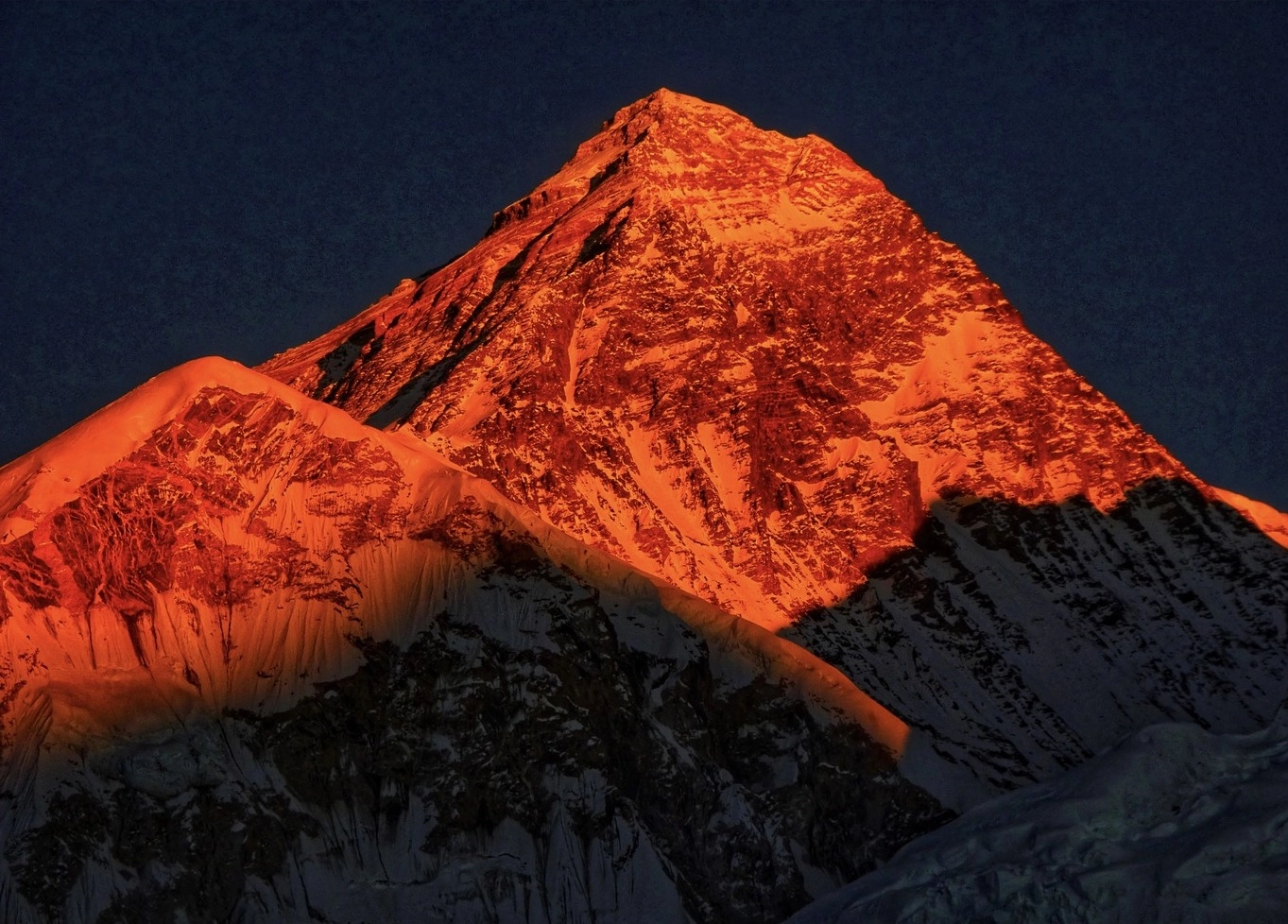
The summit of Gokyo Ri at 5,357 metres is the crowning moment of the trek, delivering a panoramic view of Everest, Lhotse, Makalu, Cho Oyu, and the sweeping expanse of the Ngozumpa Glacier that rivals and for many trekkers surpasses the famous view from Kala Patthar. It is a summit that rewards every step of the journey with a view of almost impossible scale and beauty.
With Virgin Nepal Treks and Expeditions, you explore the Gokyo valley with a professional and experienced team committed to your safety, acclimatisation, and enjoyment throughout this magnificent Himalayan journey.
Culture of the Everest Region
The Gokyo valley winds through the heart of Sherpa country, where ancient Buddhist traditions shape every aspect of daily life. Mani walls, chortens, and monastery bells accompany the trail from the lower Khumbu all the way to the shores of the sacred Gokyo lakes. The Sherpa communities of Dole and Gokyo maintain a warm and welcoming teahouse culture that has made this valley one of the most cherished and memorable destinations in the entire Everest Region.
Best Season
Spring (March to May): Clear skies, mild temperatures, and blooming rhododendrons in the lower valleys make spring one of the finest times to trek to Gokyo Ri.
Autumn (September to November): Crisp, stable weather and exceptional mountain visibility make this the most popular and highly recommended season for the Gokyo Trek.
Contact our team to plan your Everest Gokyo Trek with the right timing and support for you.
Day By Day Itinerary
Arrive in Kathmandu (1,300m /4,264 ft) Upon our arrival at Tribhuvan International Airport (TIA) in Kathmandu, we will be warmly greeted by a representative from Virgin Nepal Trek and Expedition. After completion of our custom formalities (Visa, etc), we pick up our luggage and look for our representative with Virgin Nepal Trek and Expedition display board at the arrival gate. We will be then escorted to hotel. After check in,
Early morning drive to Manthali take pack breakfast from hotel, we will be escorted to the domestic terminal of (Ramechhap) Manthali Airport for an early morning flight to Lukla (2,800m/9,186ft), a gateway destination from where our trek begins. After an adventurous 30 minute flight above the breathtaking green and white mountains, we reach the Tenzing-Hillary Airport at Lukla.
This is one of the most beautiful air routes in the world culminating in a dramatic landing on a hillside surrounded by high mountains peaks. Upon arrival at Lukla, we meet our other crew members and after some packing and arrangements, we start our trek through the prosperous village of Lukla until we reach Phakding. To assist in acclimatization, we only have a short hike today.
However, if interested in additional activities we can take a side trip to a nearby monastery. Overnight at Phakding.
Walking through a beautiful pine forest, the track leads us along the Dudh Koshi River through many suspension bridges, one of which is the famous Hillary Suspension Bridge. First, we catch wonderful prospect of the glistening Mt. Thamserku (6618 m). Through the settlement of Benkar, Chumoa, Monjo, we come to the check post and entrance to Everest National Park.
We pass through the last village of Jorsale before reaching Namche Bazaar. The trail climbs through the forests and bridges until we reach the confluence of the Dudh Koshi and Bhote Koshi rivers. After a final steep ascent of about two hours we get first sight of Mt. Everest peering over the Lhotse-Nuptse ridge. Upon this juncture, we stop at Chautara to admire the view. We still need to hike about 1.5 hours to reach Namche Bazaar, a gateway to Mt. Everest and main trading centre of this region. We stay overnight in Namche Bazaar
This is the first of the two days set aside for "acclimatization". Health experts recommend us to stay active and moving during the rest day too instead of being idle. We either spend the day taking a day's hike to Thame or visiting Khunde or relaxing and exploring Namche Bazaar itself. Namche Bazzar is the main centre of the Everest (Khumbu) region and has government offices, ATMs, Internet cafes, shops, restaurants, a bakery and a colourful market each Friday evening and Saturday.
If we trek a few hundred vertical feet during the day, it will help us to properly acclimatize. Our guides take us to the Tourist Visitor Centre near the headquarter of the Sagarmatha National Park where we can observe an assortment of things related to the first Everest ascenders, Sherpa culture and learn about the various plant and animal life of the Everest region.
Upon breakfast in Namche, we set out towards Tengboche, enjoying superb view of Mt. Everest, Mt. Nuptse, Mt. Lhotse, Mt. Ama Dablam and close up view of Thamserku. Our trek follows more or less smooth trail with few ups and downs which will not bother us as the magnificent view of the Himalayas keeps our company all through the journey. Along the way, we can spot wildlife musk deer, a herd of Himalayan Thar and multicolored pheasants.
The trail goes gradually down up to Kayangjuma. The path eventually reaches Sansa, which is the major trail junction to Gokyo valley and Everest Base Camp. The track then follows through the pine forests and after we cross the prayer flags festooned bridge over the Dudh Koshi River, we reach Phunki Thenga, a small settlement with a couple of teahouses and a small army post amidst the alpine woods.
After having a relaxed lunch at Phunki Thenga, we gear up for a slightly tougher climb through the pine forests before we reach Tengboche. Tengboche is a great place for close up views of Mt Ama Dablam, Mt Nuptse, and Mt Everest, and it has the biggest Buddhist Monastery of the Khumbu region. We pay our visit to the monastery the same day at around 3 pm to witness the ceremony in the principal and popular monastery of Everest region. Overnight stay at Tengboche.
With mountains at its backdrop, the monastery at Tengboche looks more spectacular in the morning. At this juncture, we can take pictures of the monastery and the scenery around and as usual start the day journey. We choose the upper trail for better views on the way to Pangboche village.
We pass through several Chortens and Mani walls and small villages. The place where we stop for lunch not only serves delicious food but also allows a fantastic close-up view of Mt Ama Dablam. In the afternoon, we walk north to Pheriche or take the eastward trail beneath the towering north face of Mt Ama Dablam. From here onwards, the walk is fairly moderate as we enter the Imja Valley. The valley gradually unfolds as we approach the confluence of the Lobuche River.
We descend into the river and begin the last and steepest climb of the day up to Dingboche. On arrival at Dingboche, we will see beautiful array of fields enclosed by stone walls to protect barley, buckwheat and potatoes from the cold winds and grazing animals. Overnight at Dingboche.
We spend our second day of acclimatization at Dingboche. A refreshing breakfast while admiring a looming Ama Dablam (6856m/ 22493 ft) to the south is really fantastic. To better appreciate Mt Ama Dablam, Mt Lhotse and numerous other peaks visible from Dingboche, we climb the ridge on the north behind the village.
This will be an ideal acclimatizing excursion. Upon this juncture, we can see three of the world's six highest peaks, Mt Lhotse, Mt Makalu and Mt Cho Yu. To the west, loom the towering peaks of Cholatse (6440 m/21,126 ft) and Taboche (6542 m/ 21,463 ft). As we look northwest, we see an array of peaks rising at the head of the Khumbu Khola Valley.
The Lobuche West and Lobuche East peaks are most dominant along with Lhotse which stands over 8500 meters (8501m/27, 890 ft). From a vantage point high on the ridge, we can scan the sweeping Imja Khola valley as well as the picturesque fields and pastures of Dingboche. Overnight at Dingboche.
We start the day with a climb to Duglha through the Khumbu Khola valley. The walk along the arid terrace is rewarding with awesome views of mountains on all sides. As we come to a yak herder's place called Dusa, the valley begins to narrow and we continue through Phulung Karpo, the camp site of the first successful Everest Expedition in 1953. Above Phulung Karpo is Chola Lake.
As we move on, the majestic view of Mt. Pumori (7138 m/ 23418 ft) comes into view. As the trail descends and curves, Mt. Pumori disappears from view and we come across a roaring stream. After crossing a small wooden bridge, we ascend to Duglha. We can see the tip of Mt Nuptse from here as well as Mt Cholatse, Mt Thamserku, and several other magnificent peaks. We climb up the steep terminal moraine of the Khumbu Glacier. We pass through boulder-strewn slopes as we ascend Chupki Lhara, an eerie ridge top with dramatic mountain views.
At the top of the ridge, we will find an array of stones with prayer flags used as memorials to Scott Fischer (American mountaineer) and 10 times Everest submitter Babu Chiri Sherpa (a Nepali mountain guide) who perished on a mission to climb Everest. As the trail drops to the Khumbu Glacier moraine, we find ourselves facing several great peaks - Khumbutse, Lingtren, Pumori and Mahalangur Himal.
We are now in the vicinity of Everest but the great mountain still remains elusive. Mt Nuptse towers to the right as the trail crosses the Khumbu Glacier. As we pass along a murmuring stream leaving the Khumbu Glacier behind, we now begin to feel a little out of breath due to high altitude. Overnight at Lobuche.
The trail to Gorak Shep goes ahead through the lateral moraine of the Khumbu Glacier. We pass through the pyramid sign post. Ahead on the trail we see crest of north ridge of Everest along with Mt. Pumori, Mt. Mahalangur, Mt. Lingtern, Mt. Khumbutse, Mt. Nuptse, etc.
A small ascent would take us to Thangma Riju from where we perceive 360 degree vista of snowy mountains. Climbing steeply up to the top through the torrent of Changri Glacier, we catch our first glimpse of Kala Patthar, a grey-green knoll beneath the Mt. Pumori is we reach Gorak Shep, we will find snow-capped mountains looming all around us including the top of the world Mt. Everest. After a brief lunch and rest, we take the trail to Everest Base Camp through the once vast Gorak Shep Lake.
Continuing straight ahead, we come through the Indian army mountaineers' memorials. Only upon reaching the Everest Base Camp do we really appreciate the Everest climbers who brave the hazardous route through the Khumbu icefall. Mountaineer's tents stand out in bright colours against the monotony of gray surroundings (especially in the Spring). Nuptse, Khumbuste and Pumori are the mountains we can view from the base camp. Everest actually is not visible from here.
By now we have met the ultimate objective of our trip. However, the sunset view from Kala Patthar is more admirable than the sunrise view, so it is suggested to visit Kala Patthar today during sunset. As the setting sun's rays strike the snow capped mountains the resulting scenery is indescribable.
For those trekkers who wish to continue to Kala Patthar, our guides and Sherpa coordinate in hiking to Kala Patthar for amazing sunset view today rather than waiting until the next day. Overnight in Gorak Shep at a local lodge.
Today is the climax of our trip. We start early in the morning to catch the dramatic views from Kala Patthar and witness the first light of day caress the peaks of the mountains, particularly, Mt. Everest. However, we need to be prepared for an early morning departure, amid predawn darkness and cold temperature (-10 to -14 C).
Further, there is always the potential for chilly winds which are quite common. Familiar peaks such as Lingtren, Khumbutse, Changtse tower to the east even as Everest begins to reveal itself. During the ascent to Kala Patthar, we can pause to catch breath at several outstanding view points from where we can snap great pictures.
After several hours of ascent, we reach Kala Patthar. From Kala Patthar, we scramble up to the top of a rocky outcrop marked by cairns and prayer flags. Mind-blowing Himalayan panorama unfolds before our eyes as they wander from one mighty massif to another. We can take as many pictures as we want with our camera but do not forget to imprint the vista into our mind's eye so that it lasts a lifetime.
On being back to Gorak Shep, we have breakfast and wait other participants to return. Those participants who wish to visit Everest Base Camp today will have early breakfast as the hike to base camp takes longer (4-5 hrs) than the Kala Patthar hike. Upon return to Gorak Shep, the group will have to lunch at Lobuche. After lunch continue to Dzongla
Today we need move early morning around 6 AM from Dzongla to avoid the strong winds on the pass and stones falling from the cliffs. The beginning is fairly easy but after around 30 minute enough the slope steepens and becomes increasingly more challenging.
When getting close Chola Pass there are icy path but not very slope we need keep close the distance between members after reach at Chola Pass then will have some pack foods and gradually descend west side of Cho La Pass without crampons or micro spikes can be somewhat tricky, but lots of fun at the same time.
After successfully cross the pass then can reach grassy land then straight go downhill route to Thagnak . Overnight in Thagnak.
Thagnak to Gokyo is a very short day so we have time on this day if not so tired to do Gokyo Ri (weather permitting) or chose to putter around Gokyo talking to fellow trekkers, eating cakes and drinking tea after lunch at Gokyo. The route is short but entire path in active glacier so it could be harder than normal route stone falling and slippery path not permanent path in Ngozumba Glacier because the glacier is active. Overnight at Gokyo
We spend another day in Gokyo, If the weather is good, we climb Gokyo Ri today if did not on day 11th. From the top of Gokyo Ri we admire the Himalayan vista and the tranquil Gokyo lakes. We also hike to the fourth and the fifth Gokyo lakes. The 4th lake is only about 3km north of Gokyo.
It is marked by high cliffs and Himalayan peaks rising above it. We continue to walking a little further and reach the 5th lake. A climb up a nearby hill will guarantee us remarkable views of Cho-Oyu, Gyachung Kang, Everest, Lhotse, Nuptse, and Makulu. We can see a lot more from here - the spot is called Scoundrel's Viewpoint. From the northern part of the 5th lake we see the Cho Oyu base camp and Ngazumpa Glacier which is the biggest glacier the world. We walk back to Gokyo to spend the night
We descend on a trail along the Dudh Koshi River and pass the first Gokyo lakes. On the way we also enjoy views of the Cholatse and Taboche peaks. Our trail descends before climbing a hill. After reaching the chorten at the edge, we see great views of Thamserku, Cho Oyu, and Kangtega mountains. We walk past Machhermo, Luza and Lhafarma villages before reaching Dole. Overnight at Dole.
We descend on a steep trail to Phortse Thanga admiring rhododendrons, wildflowers and waterfalls. We also come across mountain goats, musk deer, pheasants, etc. From Mong, we can admire a good view of Khumbila peak. On our way to Namche the view of Taboche, Ama Dablam, Thamserku and Kangtega mountains are ours to admire. After walking for a while, we reach an intersection where the trail from Sanasa meets our trail.
We walk on a trail that clings to a forested slope beyond Kyangjuma, winding through several bends. After reaching Namche army camp hill, we look back to see Lhotse, the tip of Everest and Tengboche for one last time. About a Kilometer from here is Namche Bazaar.Overnight at Namche Bazaar.
We descend on a rocky trail and cross several suspension bridges before walking on a levelled trail. The air is warmer as we walk on the same trail to reach Lukla. Our trek in the mountain ends after we reach Lukla. We spend our time reminiscing about our time spent in the mountain. Overnight at Lukla.
Today, we fly back to Manthali after our long mountain journey. We fly early morning flight to Manthali as possible as ,drive to Kathmandu. We can rest and relax throughout the day at hotel. If we get interested to take some gifts home from Nepal for friends and relatives, we can visit to some nearby shops or venture out at Thamel for typical Nepalese goods.
This short excursion either can be assisted by trekking guides or we can do it ourselves too. If we want to explore any other areas in Kathmandu, we have managed time for this today as well! At the evening we will be at a fantastic celebration dinner together for successfully completing our trek to Everest Base Camp hosted by Virgin Nepal Trek and Expedition! Overnight at Kathmandu.
Our journey in Nepal comes to an end today! A VNTE representative will drop us off at the airport approximately 3 hours before our scheduled flight. On our way to home, we have plenty of time to plan our next adventure in the wonderful country of Nepal.
Inclusion and Exclusion
-
Airport pickup and drop-off in Kathmandu
-
Hotel accommodation in Kathmandu
-
Domestic flights as per itinerary
-
Sagarmatha National Park permit and local permits
-
TIMS Card
-
Experienced English-speaking guide and porter
-
Tea house accommodation and all meals during the trek
-
First aid kit and emergency coordination
-
Farewell dinner in Kathmandu
-
International airfare and Nepal visa fee
-
Personal travel and rescue insurance
-
Personal trekking gear and equipment
-
Snacks, beverages, and laundry
-
Tips for guides and porters
-
Any personal expenses not listed above
Gear List & Preparation Notes
Clothing: Base layers, insulated jacket, waterproof shell, fleece, trekking trousers, gloves, warm hat, sun cap
Footwear: Waterproof trekking boots, camp sandals, trekking socks
Equipment: Trekking poles, headlamp, daypack, duffel bag
Personal Items: Sunglasses, sunscreen, lip balm, water bottles, purification tablets, sleeping bag (-10°C), personal medication, toiletries
Physical: Begin training 2 to 3 months before departure with regular hiking, stair climbing, and loaded pack walks. The trek involves sustained daily elevation gains that reward strong cardiovascular fitness.
Technical: No technical climbing skills are required. Solid trekking fitness and prior experience on high-altitude mountain trails is recommended for this route.
Altitude: The trek reaches 5,357 m at Gokyo Ri. Take acclimatisation days seriously, stay well hydrated, and always inform your guide if you feel any signs of altitude discomfort.
Mental: The Gokyo valley rewards patience and presence. The quieter trail, the sacred lakes, and the vast mountain panoramas create an experience that is as meditative as it is physically rewarding.
Insurance: Ensure your policy covers high-altitude trekking and helicopter evacuation up to at least 6,000 m.
Gear: Warm layers and a quality sleeping bag are particularly important for the cold nights at Gokyo village. Test and break in all gear before arriving in Nepal.
Talk To Expert
CEO/Founder